

blog tambre
Endocrine disruptors and fertility: a Tambre study detects them in the environment surrounding the egg
 Victoria
A pilot study carried out in women undergoing assisted reproduction treatment has found widespread exposure to endocrine disruptors and detected the presence of these substances, which are found in everyday products, in the environment where the oocyte develops.
Endocrine disruptors are chemical compounds that can interfere with the hormonal system. They may act by mimicking hormones, blocking their receptors, altering hormone production or even modifying gene expression. This interference has been linked to a range of health effects, including fertility problems, developmental alterations, changes in the timing of puberty and metabolic disorders in both women and men.
These substances can be found in everyday products such as cosmetics, personal care products, intimate hygiene products, packaging, plastics, cleaning products and items associated with food. The aim of the study was to assess the extent to which everyday habits may contribute to avoidable exposure to these substances and to identify factors that patients could potentially change in order to reduce that exposure.

The study involved 20 women undergoing fertility treatment, aged between 26 and 37. Urine samples were collected from all participants and, in 19 cases, follicular fluid was also analysed. Follicular fluid is the fluid that surrounds the oocyte as it develops. A structured nurse-led questionnaire was also used to identify possible sources of exposure in everyday life, including personal care products, intimate hygiene, menstrual hygiene, cleaning products and dietary habits.
Results: widespread exposure and presence in the ovary
The results showed that 100% of the patients had at least one detectable endocrine disruptor in their urine, confirming widespread exposure. In three cases, levels exceeded the reference thresholds, in some instances reaching up to three times the values considered normal.
“In urine, we analyse metabolites, which tells us that the exposure is not old or isolated, but recent and probably ongoing,” explains Ana Ballester, Nursing Coordinator and principal investigator of the study.
One of the most relevant findings was the detection of these compounds in the follicular fluid, the immediate environment in which the oocyte develops. This result suggests that some endocrine disruptors may reach the ovarian microenvironment and opens up new lines of research into the possible impact of environmental factors and everyday habits on reproductive health.
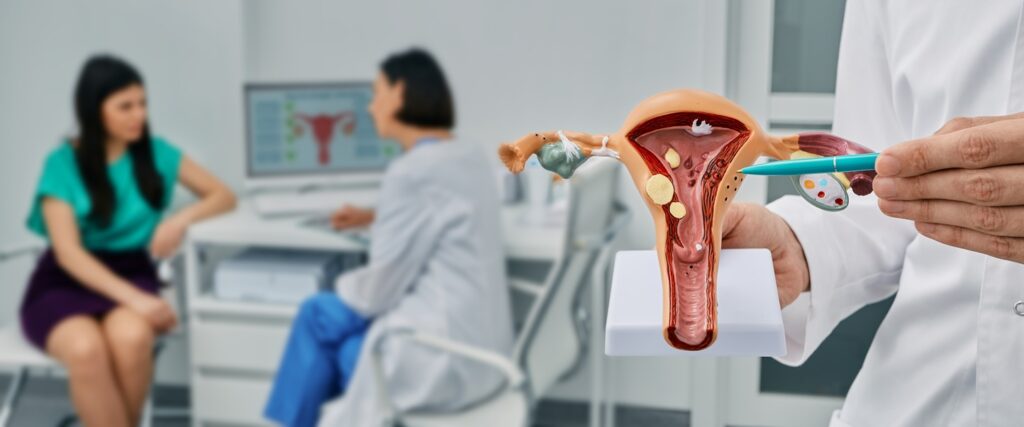
Among the findings, biomarkers of DEHP, a compound associated with certain plastics, were present in every urine and follicular fluid sample analysed. The study also identified different families of substances, including bisphenols, PFAS, dioxins, parabens, phthalates and benzophenones, which were detected in urine samples from 90% of participants.
The study also analysed the ingredients of the everyday products reported by the participants. According to the results, 84.7% of these products contained at least one ingredient with potential endocrine-disrupting properties. This helps explain why exposure may be so common: it often does not come from a single source, but from the accumulation of small, repeated contacts throughout the day.
The findings confirm that exposure to endocrine disruptors is not an isolated phenomenon, but a widespread reality. At the same time, they show that many potential sources of exposure are linked to habits that can be modified.
“Information is key. When patients understand what they are using and how they may be able to reduce their exposure, it creates a real opportunity for prevention,” says Ballester.
Although this was a pilot study with a limited sample size, the researchers highlight that the findings provide relevant insight into the interaction between environmental factors and reproductive health, while also opening up new avenues for further research.
These findings form part of the study “Avoidable lifestyle exposure to endocrine disruptors with potential impact on fertility: a pilot study”, developed by Tambre Fertility Clinics and presented at one of the leading international meetings in reproductive medicine, the European Society of Human Reproduction and Embryology (ESHRE) congress.
The study was selected for an oral presentation, one of the most prominent presentation formats within the scientific programme, and was presented by Dr Abraham Zavala, Scientific Director of Tambre Fertility Clinics and Medical Coordinator of Tambre Alicante.
If you would like to better understand your reproductive health and explore the options available to you, our specialist team is here to listen, answer your questions and offer personalised guidance.
Book an appointment