

Blog
Reproductive Immunology: Tambre Investigates the Link Between KIR Receptors and Fertility Problems
 Alexia Pina
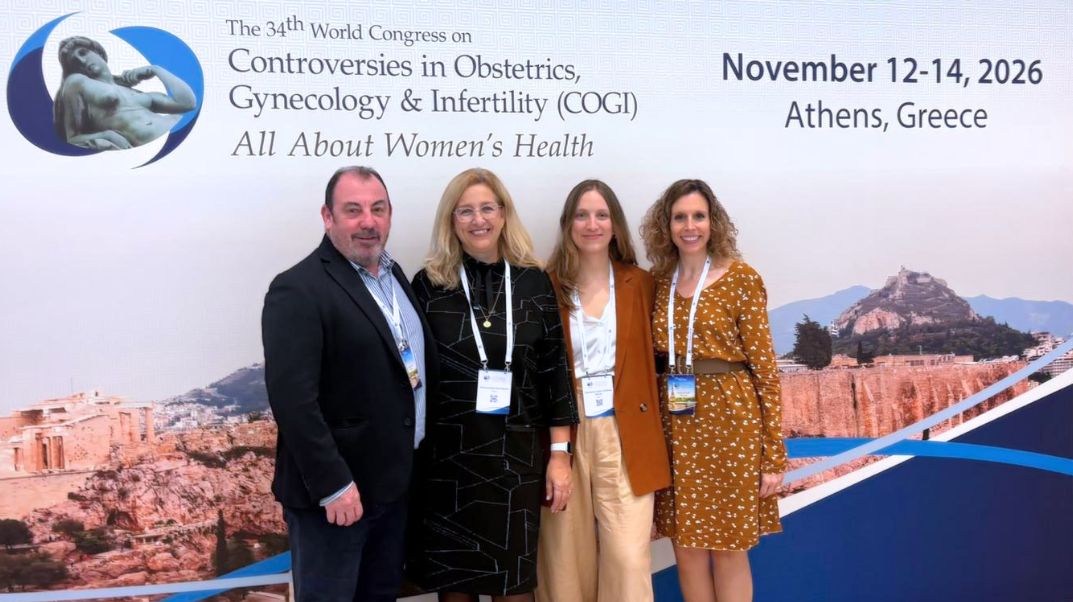
Table of contents
Could the maternal immune system be linked to certain difficulties in achieving pregnancy? A study by Tambre Fertility Clinics examines genetic differences observed in women experiencing different reproductive problems. Dr Esther Marbán presented the findings at the COGI 2026 Congress.
When pregnancy does not occur, an embryo fails to implant, or recurrent pregnancy loss occurs, finding answers can be particularly challenging. One area of research seeking to better understand these situations is reproductive immunology, which explores the role of the immune system in reproduction.
Many questions remain unanswered in this field, including the possible relationship between certain maternal genetic characteristics and fertility problems.
Researchers at Tambre have explored this question in a study on KIR receptors. The findings were presented by fertility specialist and gynaecologist Dr Esther Marbán at the international COGI 2026 Congress, held in Greece in November.
KIR Receptors and Their Potential Role in Pregnancy
Our immune system is involved in numerous processes throughout the body, including during pregnancy. The uterus contains immune cells with receptors known as KIR, which can interact with molecules called HLA-C, found on cells involved in placental development.
This interaction is being investigated because of its potential role in embryo implantation and placental development. However, it has not yet been demonstrated that specific KIR/HLA-C combinations can, on their own, explain fertility problems or pregnancy loss.
To explore this question further, the Tambre team analysed data from 381 women referred for reproductive immunology assessment.
The patients were divided into groups according to their clinical circumstances: primary infertility, secondary infertility, recurrent implantation failure and recurrent pregnancy loss.
The aim was to determine whether different genetic variants of maternal KIR receptors, known as haplotypes, occurred with the same frequency across all groups.
Differences That Raise New Questions
The researchers identified statistically significant differences, although small in magnitude, in the distribution of KIR haplotypes according to the reproductive problem being investigated.
For example, the AA haplotype was present in 35.6% of women with recurrent implantation failure, compared with 24.2% of those with primary infertility.
Meanwhile, the BX haplotype was found in 38.4% of patients with recurrent pregnancy loss.
However, no significant differences were observed in the distribution of maternal HLA-C between the different groups.
What does this mean? Certain KIR variants occur at different frequencies depending on the reproductive condition being studied, but these findings do not establish a cause-and-effect relationship.
The study also has several limitations: it did not include fertile women as a control group, nor did it have information on paternal or fetal HLA-C or subsequent pregnancy outcomes.
Therefore, these findings alone do not justify routine KIR/HLA-C testing or treatment decisions based on these results, an approach that is not currently supported by clinical guidelines.
The value of this research lies in helping to design further studies to better understand these potential associations and determine whether they may eventually have clinical relevance.
Three Tambre Studies at COGI 2026
As in previous years, Tambre participated in the World Congress on Controversies in Obstetrics, Gynecology and Infertility (COGI), which held its 34th edition in Athens, Greece, from 12 to 14 November 2026.
On this occasion, the clinic presented three scientific studies through oral presentations.
In addition to the KIR study, Dr Esther Marbán presented research on sperm DNA fragmentation, which found an association between very high fragmentation levels and fewer successful fertilisations, without observing significant differences in the proportion of chromosomally normal embryos analysed.
Senior embryologist Carolina Andrés presented another study on artificial intelligence-assisted embryo selection, which was associated with improved reproductive outcomes in certain treatments.
These three studies reflect Tambre’s commitment to scientific research, supported through the work of Fundación Tambre.
Study Presented at COGI 2026
Tambre Research:
Maternal KIR haplotype distribution across infertility phenotypes in a reproductive immunology referral cohort
Autores:
Marbán E., Zavala-García A., Serrano L., Ballester A., Padure S.
Have you experienced recurrent implantation failure or recurrent pregnancy loss?
At Tambre, we understand that every fertility journey deserves answers. Our specialist team can review your medical history and assess which tests may be appropriate to help you move towards a personalised diagnosis.