

Blog
Artificial Intelligence and Embryo Selection: Can It Improve IVF Outcomes?
 Alexia Pina
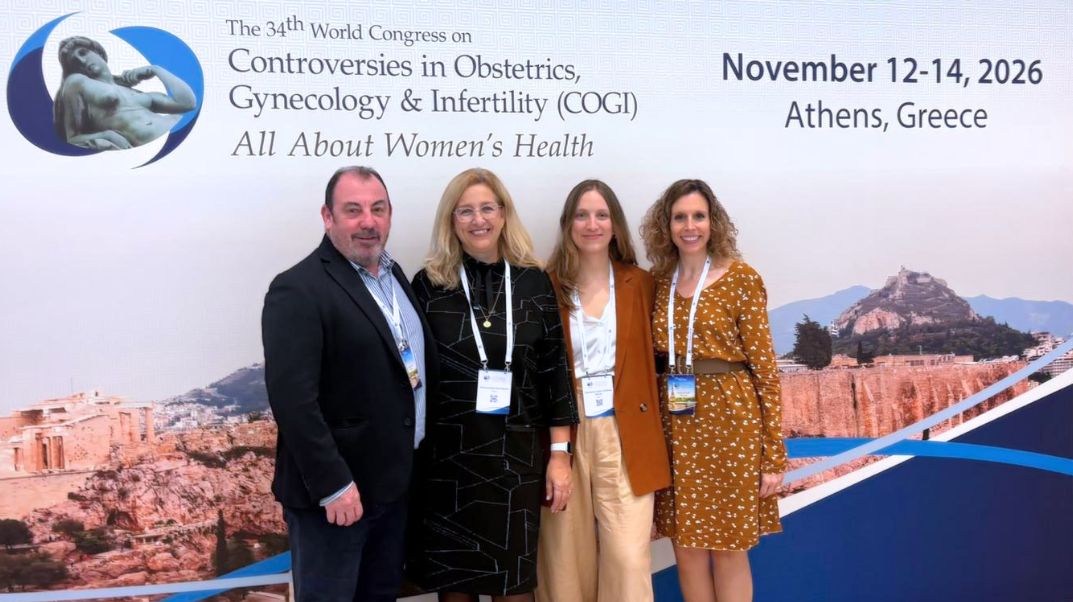
Table of contents
A study by Tambre has found an association between the use of artificial intelligence for embryo selection and higher pregnancy rates in certain assisted reproduction treatments. Senior embryologist Carolina Andrés will present the findings at the COGI 2026 Congress.
Before transferring an embryo during an in vitro fertilisation (IVF) treatment, one crucial decision must be made: which embryo to choose. Embryologists carefully assess the characteristics and development of each embryo to make this selection.
Traditionally, this decision has relied primarily on the assessment carried out by experienced embryologists, based on the embryos’ characteristics and development. Their expertise remains essential, but advances in technology are providing additional tools to support this process.
A study conducted by Clínica Tambre aims to explore whether artificial intelligence can contribute to more accurate embryo selection and improve outcomes in assisted reproduction treatments. The findings will be presented at the international COGI 2026 Congress.
When Technology Helps Support Decision-Making
The study compares two approaches to selecting embryos for transfer after cryopreservation: conventional assessment by experienced embryologists and artificial intelligence-assisted selection using CHLOE®, a system that analyses information about embryo development and provides a score to support the selection process.
The research analysed data from treatments carried out between January 2023 and December 2025, comparing pregnancy and miscarriage rates between the two methods.
The findings showed a significant association between AI-assisted embryo selection and improved reproductive outcomes.
The clinical pregnancy rate was 53% in the artificial intelligence group, compared with 45.3% in the conventional selection group.
Differences were also observed in biochemical pregnancy rates, at 59.7% versus 50.9%, and miscarriage rates, at 13.1% versus 19.4%, respectively.
These findings provide valuable insights into the potential role of artificial intelligence in assisted reproduction laboratories.

Do All Patients Benefit Equally?
This is one of the most interesting aspects of the research.
When analysing the results according to treatment type, the researchers found that the differences were particularly relevant in transfers involving embryos that had not undergone PGT-A, a genetic test used to identify potential abnormalities in chromosome number.
In these cases, the clinical pregnancy rate was 52.5% with AI-assisted embryo selection, compared with 40.8% with conventional selection.
Better outcomes were also observed in treatments using donor eggs, where the clinical pregnancy rate reached 53.4%, compared with 44% in the conventional selection group.
However, no statistically significant differences were found in transfers involving chromosomally normal embryos assessed through PGT-A or in treatments using patients’ own eggs.
These findings highlight the importance of analysing outcomes across different patient groups rather than assuming that the conclusions of a study apply equally to everyone.
Artificial Intelligence and Human Expertise: A Combination Worth Further Investigation
The results support the potential value of incorporating artificial intelligence tools into the work of embryologists, providing additional information that may help make decisions more objective and reproducible.
However, because this was a retrospective study, the findings demonstrate an association but do not establish that artificial intelligence itself was responsible for the improved outcomes observed.
The research also does not guarantee a successful pregnancy. Its value lies in continuing to identify which tools may be beneficial in different clinical situations.
Tambre Shares Its Research at COGI 2026
Senior embryologist Carolina Andrés will present this study at the 34th World Congress on Controversies in Obstetrics, Gynecology and Infertility (COGI 2026), taking place in Athens, Greece, from 12 to 14 November 2026.
Tambre will participate with three scientific studies selected for oral presentation, providing an opportunity to share knowledge and discuss findings with international specialists.
This study reflects Tambre’s long-standing commitment to scientific research and innovation in reproductive medicine, supported through the work of Fundación Tambre.
Original Title:
ARTIFICIAL INTELLIGENCE-ASSISTED EMBRYO SELECTION IS ASSOCIATED WITH IMPROVED REPRODUCTIVE OUTCOMES IN FROZEN EMBRYO TRANSFER CYCLES: A RETROSPECTIVE ANALYSIS OF 3,575 TRANSFERS
Authors:
Cortés S., Ferruelo S., Andrés C., Cordero C., Díez S., Manzanares M., Almoyna A., Rodríguez C., Pandolfi R., Ortega L.
Research is helping us move towards increasingly precise reproductive medicine.
At Tambre, we combine scientific knowledge, technology and medical expertise to understand your individual circumstances and develop a treatment plan tailored to your needs.