

Blog
Tambre Alicante’s Laboratory Director shares her expertise in safety and traceability in assisted reproduction laboratories in Brazil
 Victoria

Table of contents
Leonor Ortega, Laboratory Director at Tambre Alicante, took part in the 10th Anniversary Symposium of Arena Ideia Fértil, held in Brazil, where she discussed the role of technology in the identification, monitoring and safety of biological samples during assisted reproduction treatments.
Safety in assisted reproduction laboratories was one of the key topics at the 10th Anniversary Symposium of Arena Ideia Fértil, held on 2 October at the Palácio Tangará in Brazil. Among the participating specialists was Leonor Ortega López, Laboratory Director at Clínica Tambre Alicante, who delivered a presentation focusing on one of the most sensitive aspects of reproductive medicine: ensuring the correct identification of eggs, sperm and embryos throughout the entire treatment process.
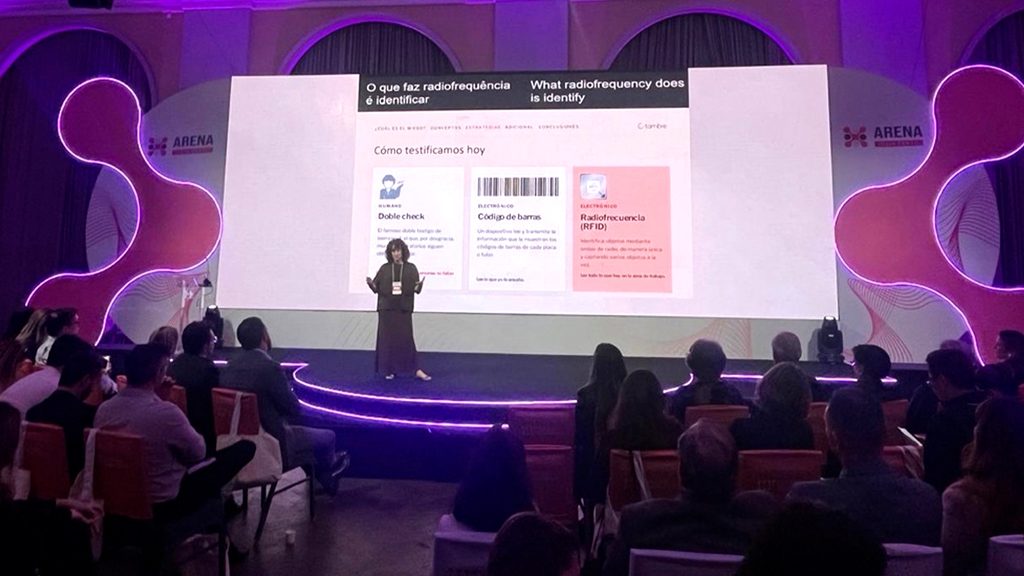
In her presentation, entitled “From Fear to Confidence. Safety and Traceability: Technology That Leaves No Room for Error”, Tambre Alicante’s Laboratory Director shared her experience of using electronic identification and monitoring systems, with particular emphasis on RI Witness, a technology implemented in Tambre’s laboratories that enhances safety through automated, real-time checks.
The use of this system and, in particular, its ability to monitor samples during laboratory procedures were among the aspects of Tambre’s presentation that attracted particular interest.
The importance of preventing errors
During in vitro fertilisation (IVF) treatment, biological samples pass through different stages and work areas. From the collection of gametes to embryo development, storage or subsequent transfer, every procedure requires rigorous identification checks.
Traditionally, these checks have been carried out using manual double-witnessing systems, in which two professionals verify the identity of the samples. Although these provide a safety measure, they depend on manual intervention and the correct completion of each check.
The introduction of electronic systems adds an extra layer of protection and represents a step towards a more automated approach to monitoring.
In this context, Leonor Ortega highlighted a fundamental distinction: traceability makes it possible to track a sample throughout its journey, whereas monitoring makes it possible to detect potential incidents at the very moment the sample is being handled.
In other words, it is not simply a matter of being able to reconstruct what has happened, but of having tools capable of identifying a mismatch before a procedure continues.
RI Witness: the technology enhancing safety at Tambre
A significant part of the presentation focused on how RI Witness works. This electronic system uses radio-frequency identification (RFID) technology to verify the identity of biological samples throughout the reproductive process.
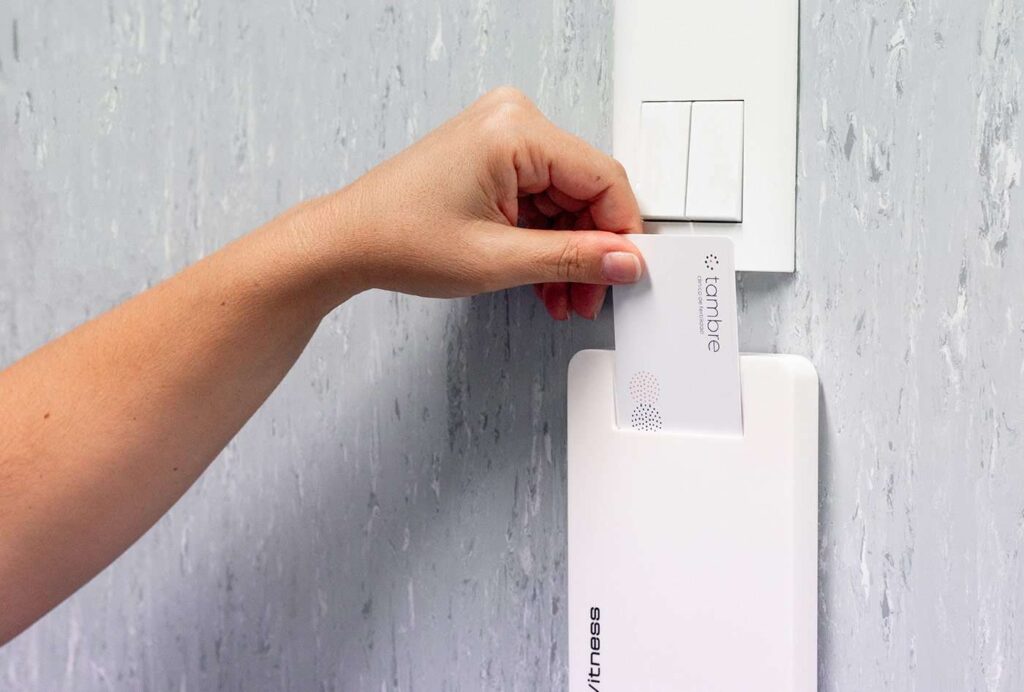
Each patient is assigned a unique identification code, which is linked to the materials used during their treatment. The different laboratory workstations are equipped with readers that automatically recognise RFID tags and verify that the samples present belong to the correct patient.
If the system detects a mismatch, it generates an alert before the procedure is carried out, allowing the team to identify and resolve the issue.
One of the features Leonor Ortega particularly emphasised was that RI Witness allows radio-frequency technology to be used throughout the different stages of treatment, from gamete collection to vitrification or embryo transfer.
Unlike other electronic systems based on barcodes, which require materials to be scanned manually, radio-frequency technology automatically detects samples located within the work area.
This makes it easier to integrate checks into routine laboratory activities without significantly disrupting professionals’ workflows or unnecessarily prolonging the handling of samples.
Safety, efficiency and greater control over procedures
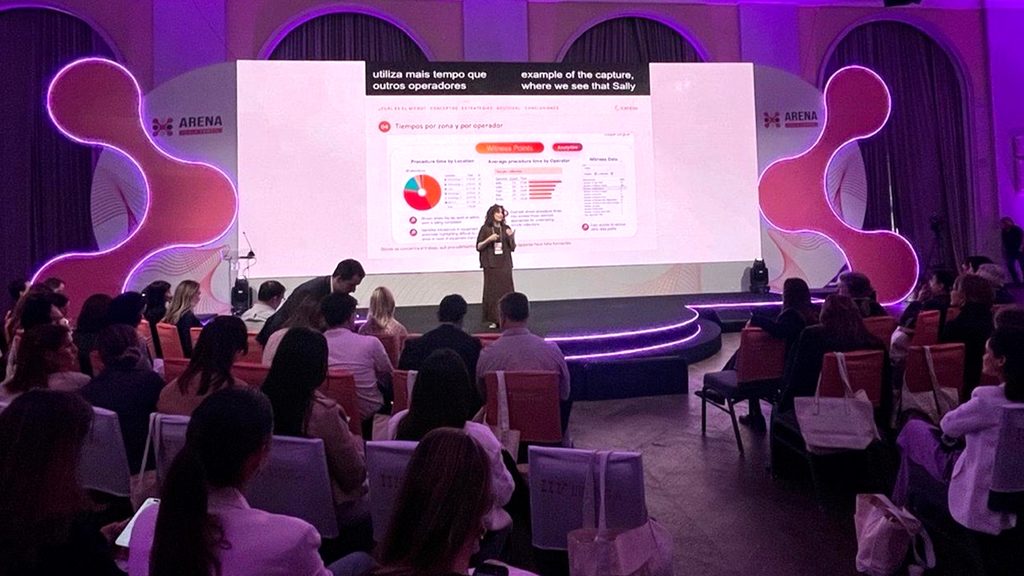
The presentation also explored the benefits of electronic systems beyond sample identification. Tools such as RI Witness make it possible to record the procedures performed, identify the professionals responsible and track the materials and consumables used during each cycle.
This information facilitates audits, helps reduce administrative tasks and allows laboratory activities to be analysed to identify opportunities for improvement.
Ortega also referred to scientific studies on the efficiency of electronic witnessing, which have reported reductions of around 50% in handling time compared with traditional manual double-witnessing procedures.
Another aspect discussed was the safety of the radio-frequency technology used by RI Witness. Its tags are passive, have no power source of their own and are only activated when they are close to a reader.
In any case, technology does not replace the experience or responsibility of embryologists. Instead, it acts as a complementary tool to strengthen safety protocols and support their work.
Tambre’s expertise at international events
Leonor Ortega’s participation in Arena Ideia Fértil reflects Tambre’s commitment to sharing scientific knowledge and continuously improving laboratory procedures.
With almost five decades of experience in reproductive medicine, the group remains committed to introducing technologies that help improve precision, safety and quality of care.
The experience shared in Brazil highlights that innovation in assisted reproduction does not depend exclusively on the development of new treatment techniques. It also requires reviewing and refining the processes that ensure every stage is carried out to the highest standards of rigour.
The safety of biological samples is a fundamental responsibility in assisted reproduction laboratories. Strengthening it through real-time monitoring systems represents a step towards reproductive medicine in which technology, knowledge and professional expertise work together.
As Leonor Ortega explained during her presentation, this evolution makes it possible to transform concerns about errors into greater confidence, both for healthcare professionals and for patients.